
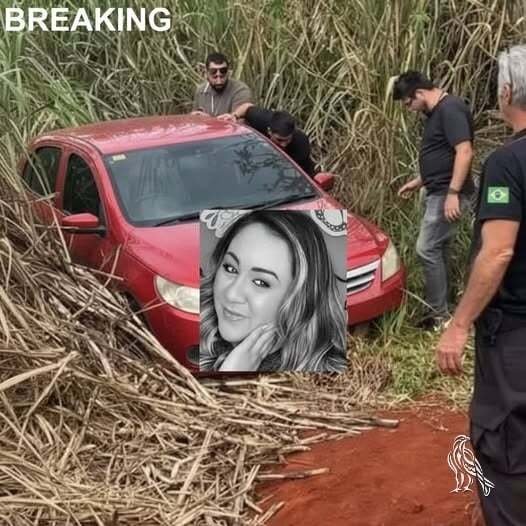
For sixty agonizing days, the world revolved around a single haunting image: a photograph of Raisa, taped to telephone poles, shared across thousands of screens, and held tightly in the hearts of everyone who followed her story. Every sunrise carried a fresh wave of dread. Every sunset deepened the unbearable silence of her absence.
Then, the impossible happened.
The call came. The search ended. And Raisa was found alive.
Relief swept through everyone who had followed her story—a moment that felt like a miracle after weeks of fear, uncertainty, and relentless hope. But as the initial shock begins to fade, a far more complicated reality is settling in.
Because while her return answers the most devastating question, it also raises new ones. Questions that remain unanswered, unspoken, and deeply unsettling.
And now, the world is left wondering what really happened in the days she was gone—and whether the truth will ever fully come to light.
The Relief That Isn’t the End
Behind the scenes, officials continue working to reconstruct the timeline of her disappearance. Investigators follow leads, review evidence, and piece together what happened. But in the meantime, her family has withdrawn into a protective silence, shielding themselves from the growing pressure and public attention.
In the absence of confirmed facts, a vacuum has formed—and whispers have filled it.
Neighbors who once spent days searching fields, posting flyers, and knocking on doors now watch from a distance as the family navigates a trauma still hidden from public view. Tension lingers in the air. The unanswered questions—where she was, how she survived, and perhaps more importantly, who she was with—carry a weight that threatens to disrupt the fragile peace everyone is trying to rebuild.
Authorities remain unusually tight-lipped, and the lack of transparency has only intensified public curiosity. For those who once took part in the search, stepping back has proven emotionally difficult. What was once an urgent collective mission has now become a painful exercise in patience and restraint.
The community is slowly learning an uncomfortable truth: while they felt deeply connected to the search, the healing process itself does not belong to the public. It belongs to her—and to her family.
🌿 The Community’s Role Now: Stepping Back to Step Up
Now, the frantic urgency of the search has been replaced by something far harder to sustain: waiting.
Waiting without answers.
Waiting without certainty.
Waiting for clarity that may take months, or even years, to arrive.
Waiting without certainty.
Waiting for clarity that may take months, or even years, to arrive.
In that waiting, a quieter understanding is beginning to emerge:
- Not all stories offer immediate closure.
- Not all truths are ready to be spoken.
- Sometimes, the most meaningful support comes not from demanding answers, but from giving space for healing to begin.
How to Support Ethically Moving Forward
|
What to Do
|
Why It Matters
|
|---|---|
|
Respect privacy
|
Trauma recovery requires safety, not scrutiny. Let the family set boundaries.
|
|
Avoid speculation
|
Unverified theories can retraumatize, mislead investigations, and spread harm.
|
|
Amplify official channels
|
Share only verified updates from law enforcement or family representatives.
|
|
Offer practical, quiet support
|
Meals, childcare, or covering chores often help more than public posts.
|
|
Practice patience
|
Healing is nonlinear. Trust that the family and investigators are doing what’s needed.
|
💙 A Compassionate Reminder
If you’re reading this because you followed Raisa’s search, volunteered, or felt the weight of those 60 days in your own heart—please know:
🌿 Your care mattered. Every flyer, every share, every prayer held space for hope.
🌿 Stepping back isn’t abandonment. It’s an act of respect. Healing requires quiet.
🌿 You don’t need all the answers to still care deeply. Compassion doesn’t require closure.
🌿 The truth will emerge in its own time. Forcing it rarely helps; patience often does.
🌿 Stepping back isn’t abandonment. It’s an act of respect. Healing requires quiet.
🌿 You don’t need all the answers to still care deeply. Compassion doesn’t require closure.
🌿 The truth will emerge in its own time. Forcing it rarely helps; patience often does.
As Raisa begins the long journey of rebuilding her life after sixty days of uncertainty, the community takes a step back—offering patience instead of pressure, silence instead of speculation, and hope that one day the truth will bring healing rather than deepen the wound.
🧭 The Bottom Line
A missing persons case doesn’t end when someone is found alive. It transitions from rescue to recovery—and that phase is often the hardest, the quietest, and the most misunderstood.
Remember: 🕊️ Being found is a miracle, but trauma doesn’t end with rescue
🔍 Investigations take time; truth requires patience, not pressure
🤝 The best support now is respectful distance, practical help, and unwavering compassion
📖 Healing belongs to the survivor and their family—not the public square
💙 You can care deeply without demanding answers. Sometimes, silence is the loudest form of love.
🔍 Investigations take time; truth requires patience, not pressure
🤝 The best support now is respectful distance, practical help, and unwavering compassion
📖 Healing belongs to the survivor and their family—not the public square
💙 You can care deeply without demanding answers. Sometimes, silence is the loudest form of love.
May Raisa find peace. May her family find strength. And may we all learn, through moments like this, how to hold space for others’ healing without making it our own.